How Numbered Queue Tickets Changed the Experience of Waiting
Numbered queue tickets made turn-taking visible and freed people from holding a place in line, clarifying how shared services organise waiting.
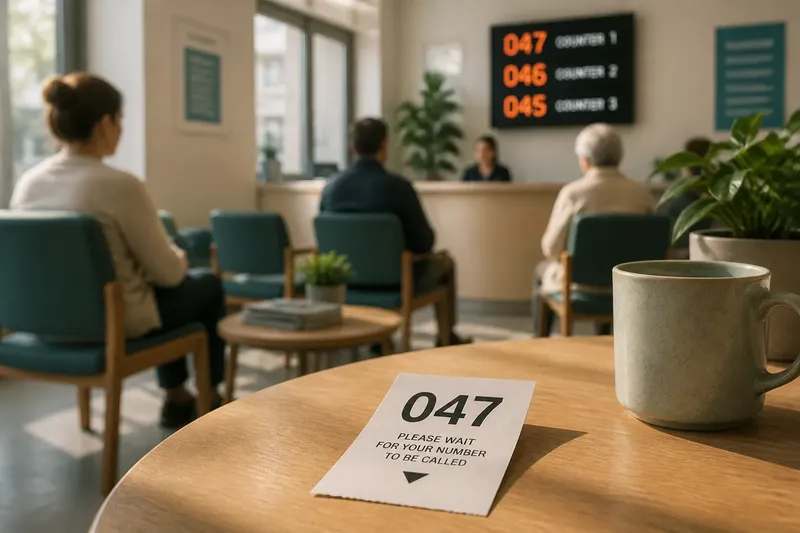
The common mistake is to treat a queue ticket as a small substitute for standing in line. That misses what numbered queue tickets changed: they made turn-taking visible while separating a person’s place in the sequence from their physical position. In a waiting room, this can mean the difference between guarding a spot and knowing when to return.
A paper ticket is a modest object, but it carries an instruction about how a shared service works. Its number represents an order; a display or staff call connects that order to the next available service. Understanding this shift helps explain why ticket systems suit some public settings and feel awkward in others.
Before the ticket
In a simple line, order is communicated by bodies. People can usually see who arrived before them, and each person’s place depends on remaining in position or asking someone nearby to hold it. The arrangement is easy to grasp when the line is short and the service point is visible.
That physical clarity has limits. A person may need to sit, move a pram, use the toilet, or ask a question at another counter. If leaving means losing a place, the line makes waiting a continuous physical task. In a crowded room, people may also struggle to tell where the queue begins or whether someone has stepped away briefly.
Communities and services have long used different ways to organise turns, including informal order, lists and tokens. The important change associated with numbered tickets is not simply replacing a line with paper. It is making each turn portable: the claim to a place can remain meaningful even when its holder is not standing beside the next person.
What the number represents
A ticket number is a proxy for position, not a measure of time. It tells a visitor something about sequence, but not necessarily how long the wait will be. A service may need to handle different kinds of requests, call people to more than one desk, or pause while a case is dealt with. The number can preserve an order without predicting the moment of service.
This distinction matters because visitors often read a rising display as a clock. If a screen shows a number far beyond theirs, they may assume the wait is nearly over; if it barely changes, they may think the system has stalled. Clear information can explain whether numbers are called in strict order and what to do if a call is missed, without promising a precise arrival time.
The ticket also separates the queue from the queueing place. A line binds order to location; a ticket lets people wait in a seating area, keep an eye on a display, or remain within hearing distance of an announcement. Like a library book marker, it holds a place in a sequence while the person attends to something else.
How tickets changed rooms
Once order no longer depended on a visible line, the waiting room could be arranged around more than a single row of people. Seating could face a display, several service points could call separate numbers, and visitors could gather near the area relevant to their appointment or request. The layout became part of how the system communicated.
This freedom also moved some responsibility from the crowd to the service. In a physical queue, people can often judge progress by watching the person at the front move forward. With tickets, the service must make calls audible or visible and help visitors understand which number belongs to which counter. A number that is called but cannot be heard is not useful communication.
Ticket systems therefore work best as a relationship between a token, a calling method and a clear next action. A printed slip alone may leave a visitor wondering whether to sit, approach a desk, or wait for their number. A display without an explanation may be equally opaque. The design question is not only what the ticket says, but how a visitor recognises that their turn has arrived.
Choosing a queue format
Neither a standing line nor numbered tickets are automatically fairer. The right arrangement depends on the service, the room and the kinds of visits people make. A short, visible queue can be easier to follow than a ticket system with an unreliable display. A ticket can be more accommodating where visitors need to sit or move around while waiting.
- Use a visible line when the service is straightforward, the queue is easy to see, and visitors can comfortably remain in place.
- Consider numbered tickets when people need to sit, the waiting area is separate from the counter, or several service points share an orderly call system.
- Explain exceptions when some requests are handled differently, so visitors can understand why a number may not be called in simple sequence.
- Offer a clear missed-call route so a visitor who did not hear or see their number knows whom to approach and what may happen next.
- Check the room’s signals by considering whether a seated visitor can see the display and hear calls without having to keep watch at the counter.
These are design considerations rather than universal rules. The same building may need a direct line at one counter and tickets at another. What matters is that people can tell how to join, how their turn is represented, and how to respond when called.
When does a ticket help?
Why not keep everyone in one line?
A line makes order visible through people’s positions, which can be useful for a simple service with a clear front. A ticket system is more helpful when visitors should be able to sit, move away briefly, or wait near more than one service point.
Does a ticket show how long the wait will be?
Usually, it shows a place in sequence rather than a reliable duration. The pace can change as different requests take different amounts of attention, so services should avoid implying that a number is a precise time estimate.
What if someone misses their number?
The service needs a visible or spoken way to explain what the visitor should do next. A clearly identified staff member or counter can help resolve the missed call without forcing people to guess whether they have lost their turn.
Can a ticket system work without a screen?
Yes, if the calling method remains clear and accessible to people in the waiting area. Staff can call numbers aloud, but the room should support hearing the call and understanding where to go afterwards.
Making the sequence legible
Say a local advice centre has a single counter and a small waiting room where visitors sometimes need to step outside for privacy. It introduces numbered paper tickets and calls each number aloud, while a simple sign explains where to wait and where to go when called. Visitors can then leave the counter area without having to negotiate who was next; the observable change is that the order is represented by tickets and calls rather than a cluster of people guarding the front.
That arrangement still needs attention to ordinary details. Tickets should be easy to take and read; numbers should be distinct enough to hear; and the call should identify the destination as well as the number if more than one desk is operating. If the system uses a screen, its display should be visible from the seating area, not only from the entrance.
Staff also shape whether the system feels understandable. A brief explanation at the point where tickets are issued can answer the immediate questions: keep the ticket, watch or listen for the number, and follow the indicated direction when called. If the process changes during a busy period, visitors need that change explained rather than left to infer it from the movement of others.
The human place in line
Numbered tickets did not remove waiting. They changed how a service expresses order and where a person can be while waiting for a turn. That distinction is useful when assessing a shared resource: ask whether the system makes sequence clear, whether people can wait in a way that suits the room, and whether a missed call has a comprehensible next step.
The phrase “your number is next” carries a small promise of recognition, not a clock reading. A well-considered ticket system makes that recognition practical: the visitor can identify their place, hear or see when it is their turn, and know where to go. That is the lasting value of numbered queue tickets—not that they make waiting disappear, but that they make a turn visible without requiring a person to stand on it.