A First Visit to a Shared Facility: A Five-Minute Orientation
A first visit to a shared facility can feel uncertain. Use a calm five-minute orientation to find the main information, shared areas and one useful contact.
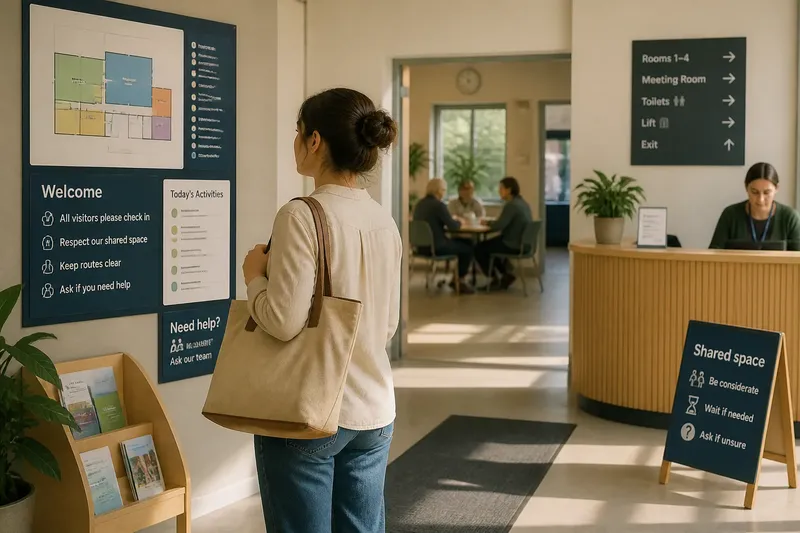
The common mistake on a first visit to a shared facility is to walk straight in and start searching while people are moving around you. That can mean missing a simple entry rule, mistaking a shared area for a private one or asking the wrong person for help. A short pause at the entrance gives you a chance to get oriented without holding up others or pretending you already know the place.
Think of the pause like setting down a bag before opening it: a small moment of stillness makes it easier to see what you need. The aim is not to memorise the building. It is to locate the main information, recognise the shared areas and ask one focused question before settling in.
The entrance pause
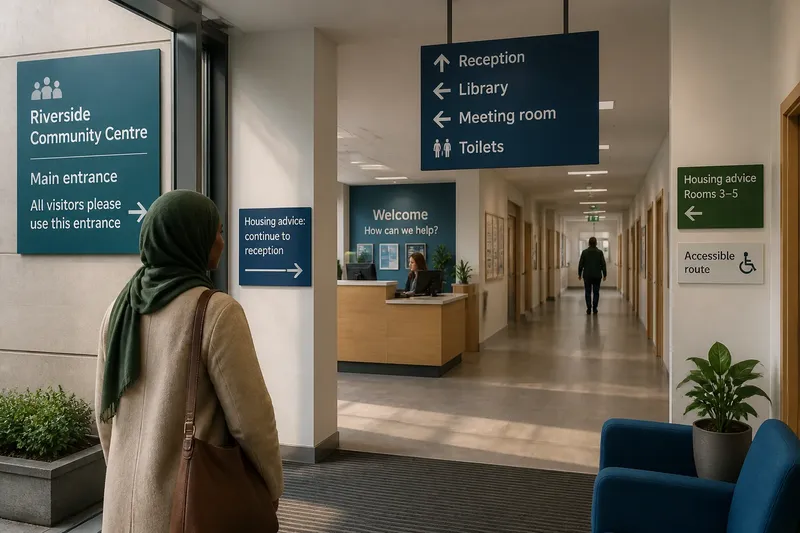
Stop where you are not blocking a doorway, ramp or busy route. Take in the layout before moving further. Look for a directory, welcome board, posted conditions of use or a map; these may be at the entrance, beside a counter or near the route into the main space.
Start with the information that affects what you do next. Notice any instructions about checking in, booking, using equipment, storing belongings or keeping particular areas clear. You do not need to read every notice. If a message is relevant to your intended activity, read it before proceeding; if it is not, keep moving without treating the entrance as a place to study.
If the information is hard to see or seems to conflict, do not guess. Look for a staff member or another clearly identified point of contact. A brief pause is useful only if it leaves you better placed to act.
Finding the main information
It is easy to mistake the most prominent notice for the most useful one. A large poster may advertise an event, while practical details sit on a smaller board or in a leaflet holder. Scan for the information that answers three immediate questions: where visitors should go, what they may use, and whom to approach if something is unclear.
Shared facilities differ. A community centre may have a reception point and rooms used by separate groups; a library may have open seating alongside bookable areas; a leisure centre may divide public routes from activity spaces. These distinctions are not always obvious from the entrance. Use a map or directory to connect the names of rooms with their location, then check whether the space you want is open to general use.
Imagine you arrive at a community workshop and see a table of leaflets, a corridor and a room with people inside. You check the welcome board, find that activities take place in named rooms, and look for that room on the directory before entering. The expected observable result is that you reach the relevant area without interrupting a group to ask where it is.
Reading shared areas
A shared area is a space intended for more than one visitor or group, but that does not mean every part is open at all times. Pay attention to cues such as room names, booking notices, barriers, signs asking people to wait, and whether an activity appears to be under way. A corridor, foyer or seating area may be open for passing through while a nearby room is reserved.
Look for the practical boundaries: where visitors can wait, where belongings may be placed, and which routes need to stay clear. If a table or piece of equipment looks available, check for a label or notice before using it. A space that seems empty may be prepared for another group, and a space with people in it may still welcome drop-in use.
When the boundary is unclear, pause outside the area rather than entering and then backing out. Ask a nearby staff member or host whether the space is open to visitors. This is more considerate than relying on another person’s presence as permission, and it gives you a clear answer before you unpack or settle.
When arrival gets awkward
You cannot tell where to begin. This often happens because a facility has several entrances or because the first visible desk serves only one activity. Look for a general directory or a sign naming visitor services; if neither is clear, approach a staff member who appears to be available and ask where visitors should start.
The information seems out of date. A notice may remain after an activity or room arrangement has changed. Check for a more current board nearby, or ask whether the posted details still apply before relying on them. Avoid taking a leaflet or notice as definitive if it contradicts what you can see on arrival.
You are unsure whether a room is shared. The cause may be a booking that is not displayed at the entrance or a boundary that is easy to miss. Wait outside, check the room label and ask whether visitors may use it now. If it is reserved, ask where an appropriate alternative is located.
You have several questions and do not know which to ask first. Start with the question that affects your next action: where to go, whether you may enter, or how to use the space. Hold questions about less immediate details until you are settled, unless they affect access or your ability to take part.
One focused question
A concise question gives someone a clear task to answer. Instead of saying, “I’m not sure what to do here,” try, “Is this seating area open to visitors?” or “Which room is used for the drop-in session?” If you need a particular kind of assistance, say what would help you take the next step, such as finding a step-free route or locating a quieter place to wait.
Listen for the next action in the reply. If the answer points you towards a room, board or named person, follow that direction and check the relevant information there. If it does not resolve the uncertainty, ask one short follow-up tied to the same issue rather than starting the explanation again.
Questions at arrival?
What should I check first?
Check where visitors should go and whether there is an entry or booking requirement that applies to your visit. Then look for the location of the area you intend to use.
What if there is no obvious staff member?
Use the directory, welcome board or visitor information point to identify a contact route. If the facility has no clear contact point, wait somewhere that does not obstruct others and look for the next appropriate opportunity to ask.
Can I sit down before I have worked everything out?
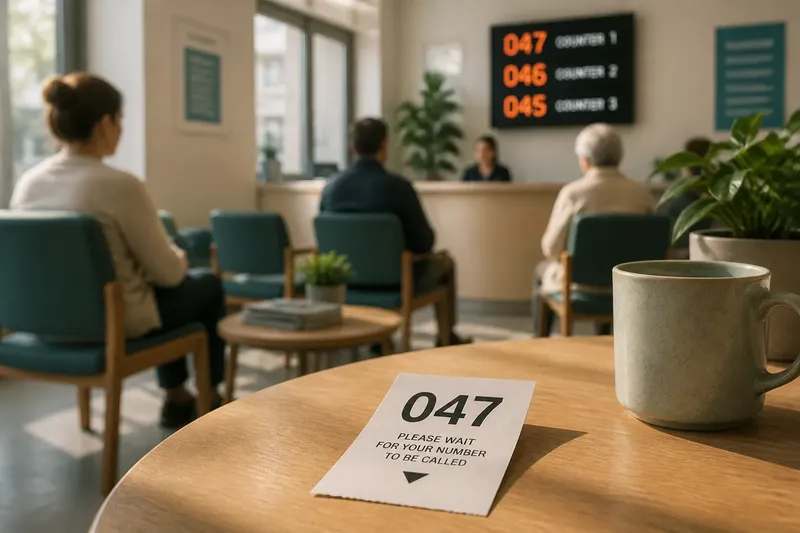
Yes, if the seating area is clearly open for general use and you are not blocking a route. You can settle briefly, keep your belongings with you and finish checking details before entering a room or using equipment.
Settle with confidence
Before choosing a place, make a final check of the immediate area: whether the seat or table is available, whether belongings can be left there, and whether you are near enough to hear any relevant announcements. Keep walkways and access routes clear. If the space is busy, take only the area you need and follow any posted guidance about sharing it.
A first visit to a shared facility need not become a tour of every room. Pause, find the main information, identify which areas are shared and ask the question that determines your next move. Once you know where you may be and what to do there, you can focus on the reason you came.